Our latest data update looks at national private surgical activity through July 2026.
1. Our read of July 2026
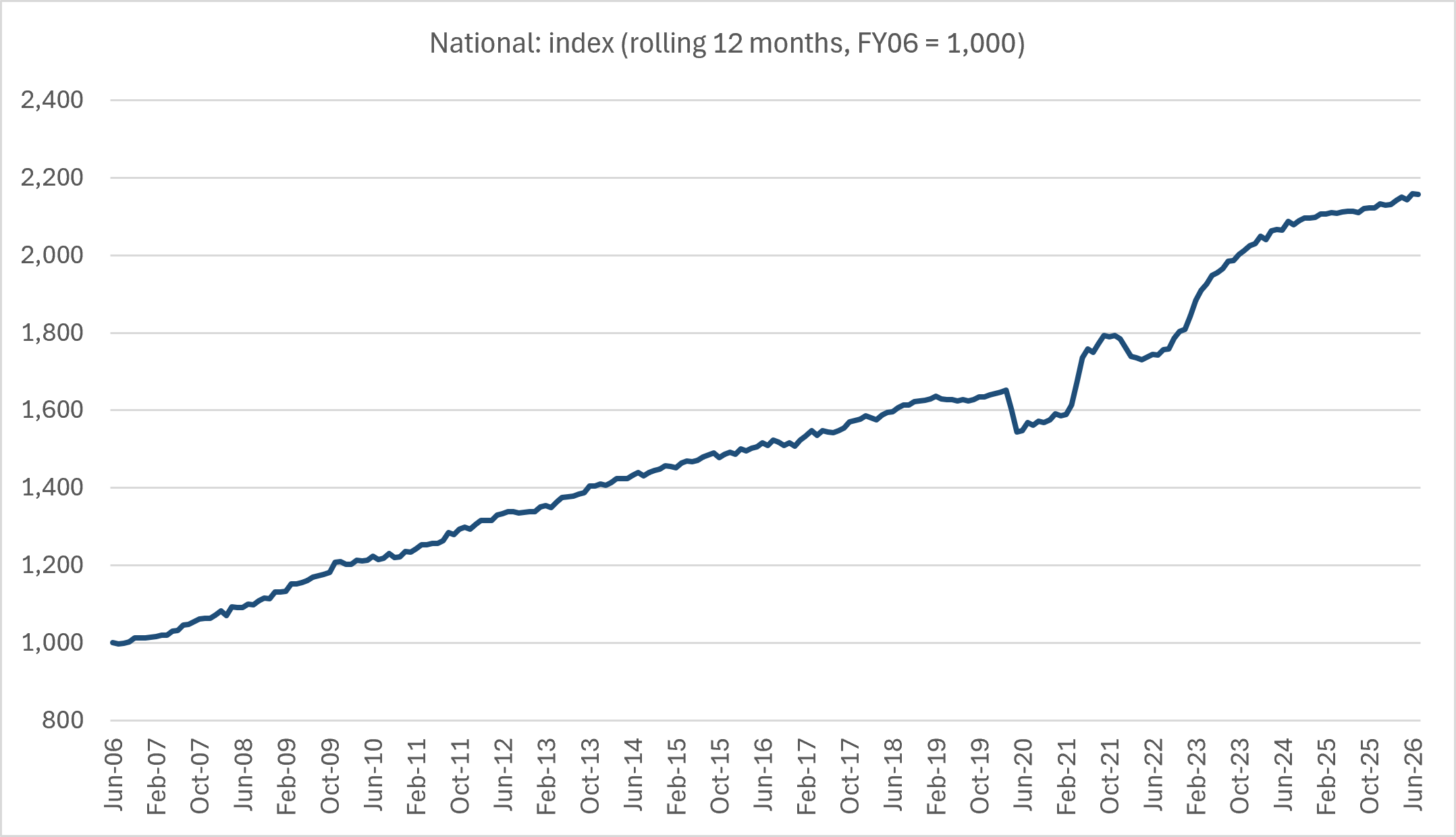
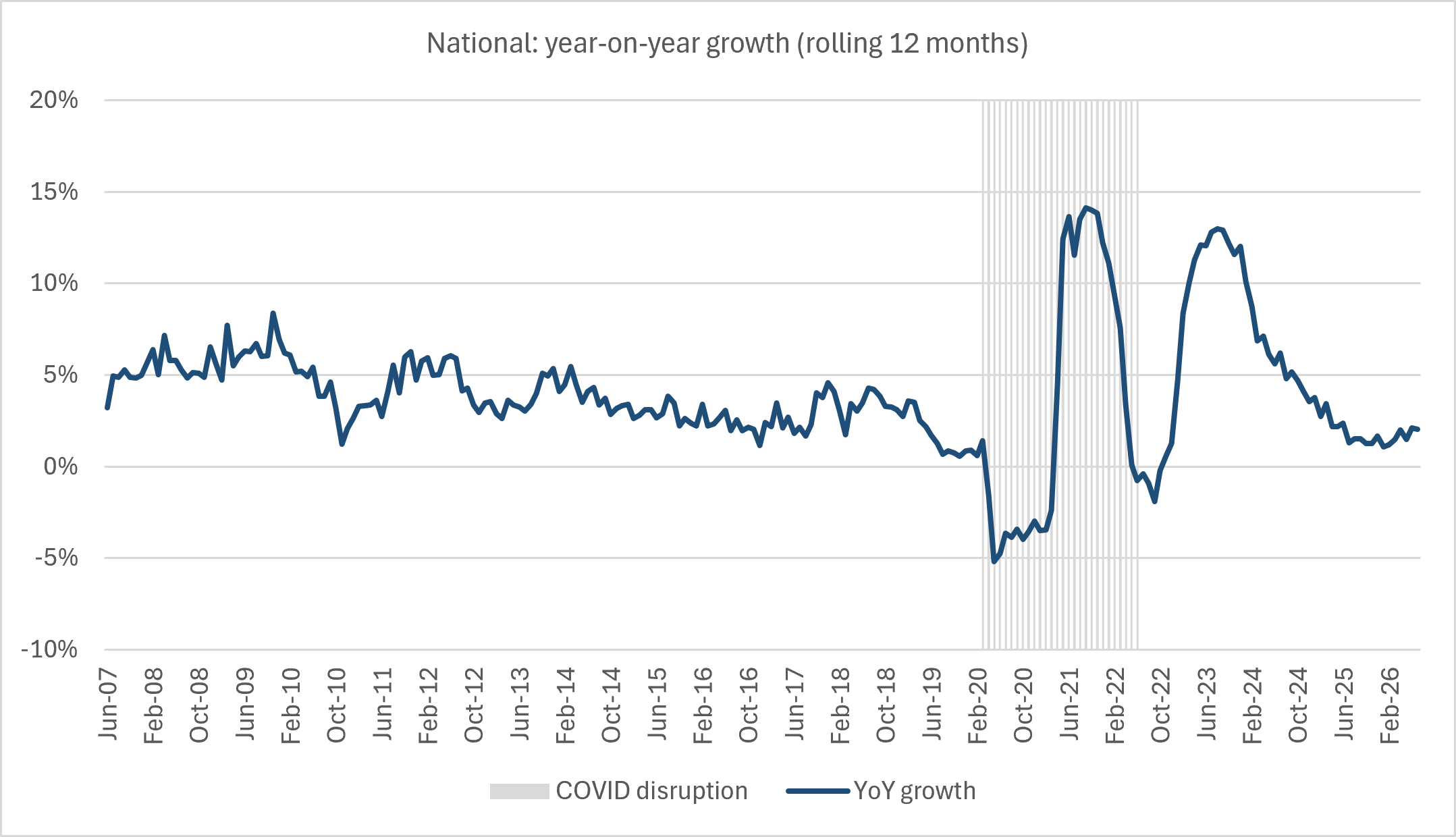
After the dip in May and the recovery through June, the index held at 2,157 in July. That's essentially flat month-on-month and within a point of June's all-time high. Year-on-year growth is running at roughly 2%, well below the double-digit pace of the post-COVID recovery years.
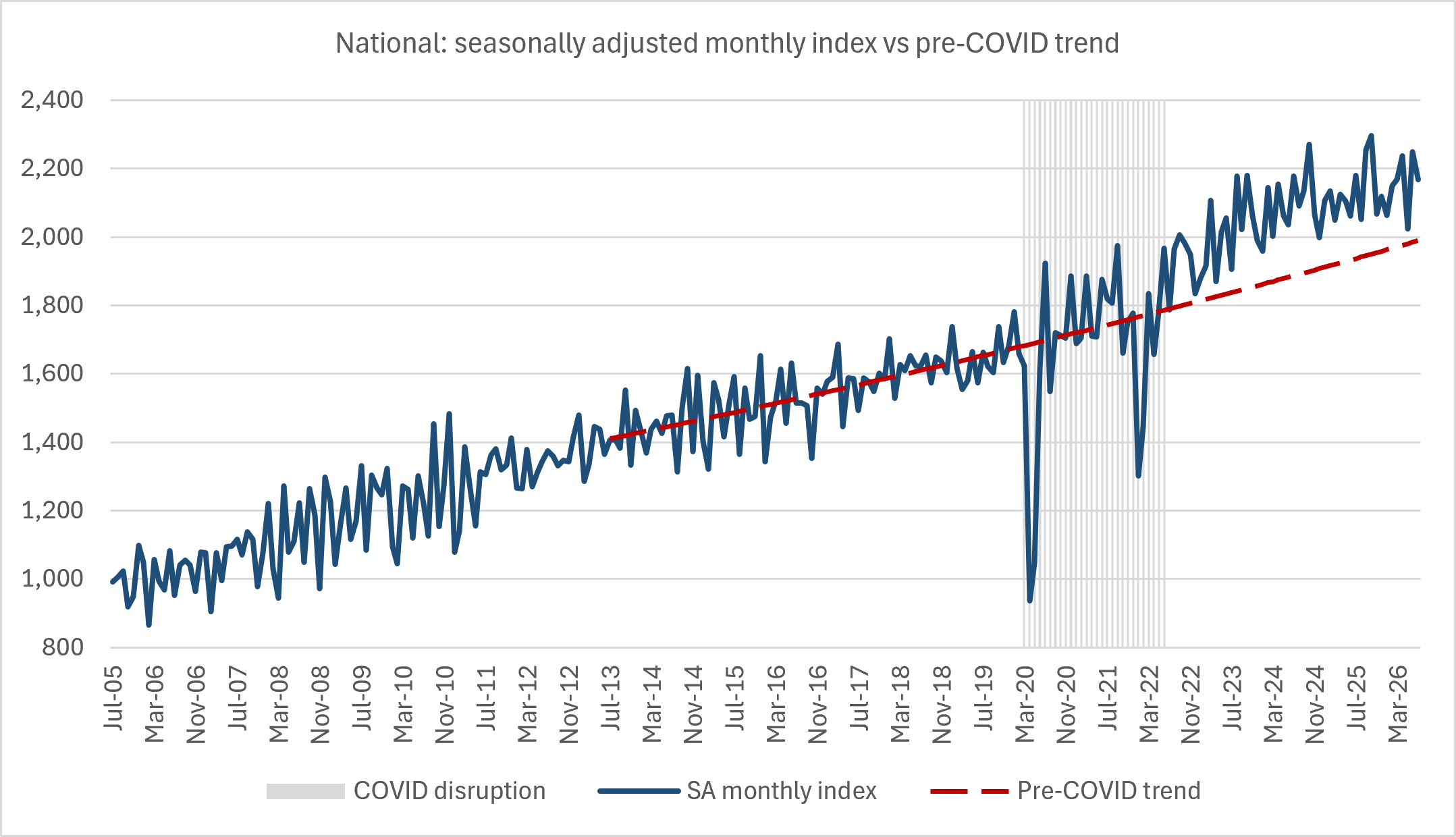
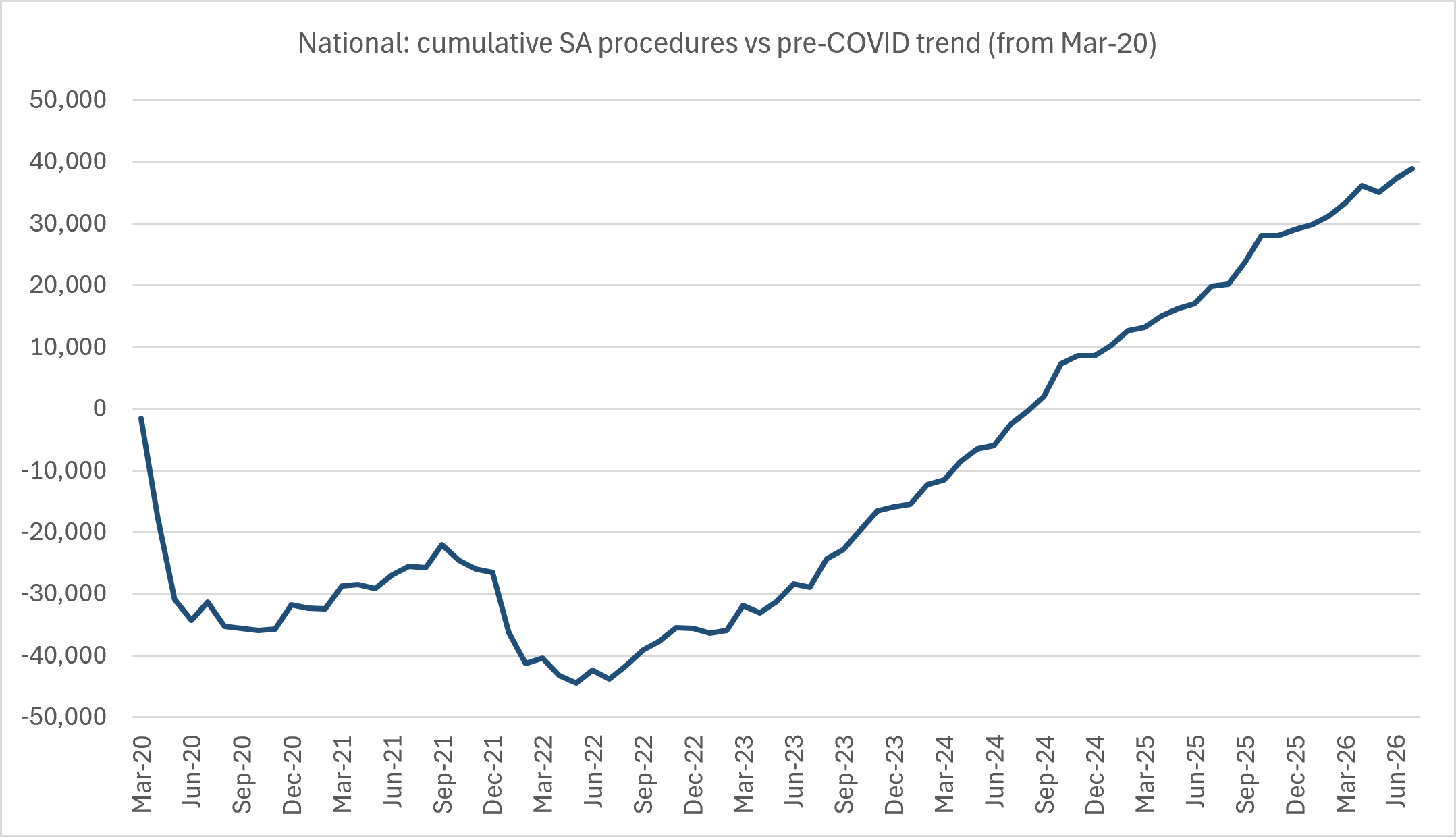
Seasonally adjusted volume remains about 8% above the pre-COVID trend (three-month average). The sector is now close to 39,000 procedures ahead of that trend since COVID began.
2. What This Means for Practice Owners
Three observations for anyone planning FY27:
- The tailwind has moderated. Volume is at record levels but is no longer compounding quickly. Budgets built on 5–10% organic volume growth are budgets built on the 2022–24 environment, not this one.
- Margin is now the lever. With throughput close to flat, earnings growth has to come from case mix, theatre and room utilisation, billing discipline and cost control rather than from more patients walking through the door.
- Share gains matter more. In a plateauing market, growth increasingly comes at a competitor's expense, which raises the return on referral relationships, patient experience and marketing.
We will continue to track the index monthly and flag any break from the plateau.
Next steps
Connect with us to learn how Practice Alliance can help your practice.
Frequently asked questions
What was the Private Surgery Index in July 2026?
The index was 2,157 in July 2026, essentially flat on June and within a point of June's all-time high.
How fast is private surgical volume growing in 2026?
About 2% a year as of July 2026. That's well below the double-digit growth of the post-COVID recovery years.
Is private surgery above its pre-COVID trend?
Yes. In July 2026, seasonally adjusted volume was about 8% above the pre-COVID trend. The sector was close to 39,000 procedures ahead of that trend since COVID began.
What should practices assume for FY27 budgets?
Broadly flat volume. With market growth near 2%, earnings growth will mainly need to come from case mix, utilisation, billing discipline, cost control and market share.