For three years the reform agenda has been pointed squarely at general practice: expanded bulk billing incentives, an expanded scope of practice for pharmacists and nurse practitioners, and steady pressure on what GPs charge patients above the schedule fee. With the Health Legislation Amendment (Improving Choice and Transparency for Private Health Consumers) Bill 2026, that attention has turned to non-GP specialists, whose individual fees are set to be published on the Medical Costs Finder.
Before the next round of policy lands, it is worth looking at what the data actually shows about how each segment has fared. We have separated attendance volumes from average benefits per service across GP, specialist and physician attendances for the five years to 2026.
1. General Practice: Volume Normalised, Value Did the Work
Volume
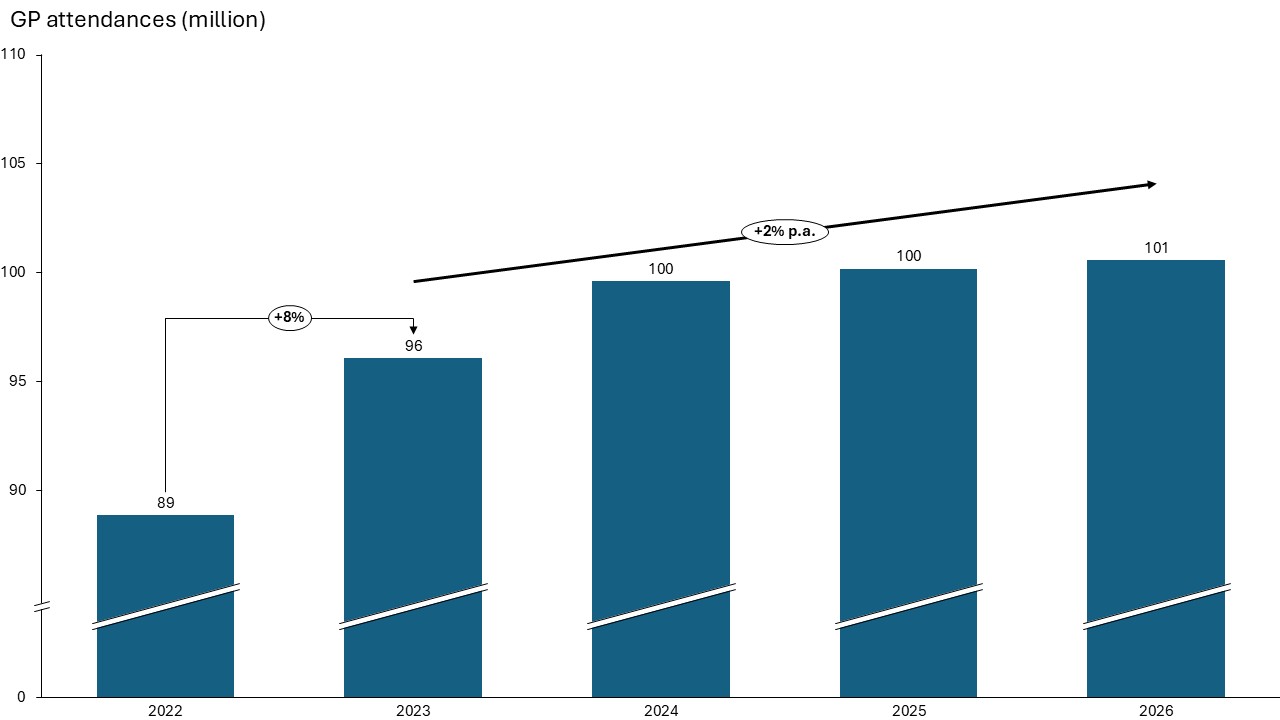
GP attendances rebounded 8% in 2023 to 96 million as post-COVID activity normalised, then settled into a 2% per annum trajectory: 100 million in 2024, 100 million in 2025, and 101 million in 2026. That is lower than population growth plus aging effects.
Value
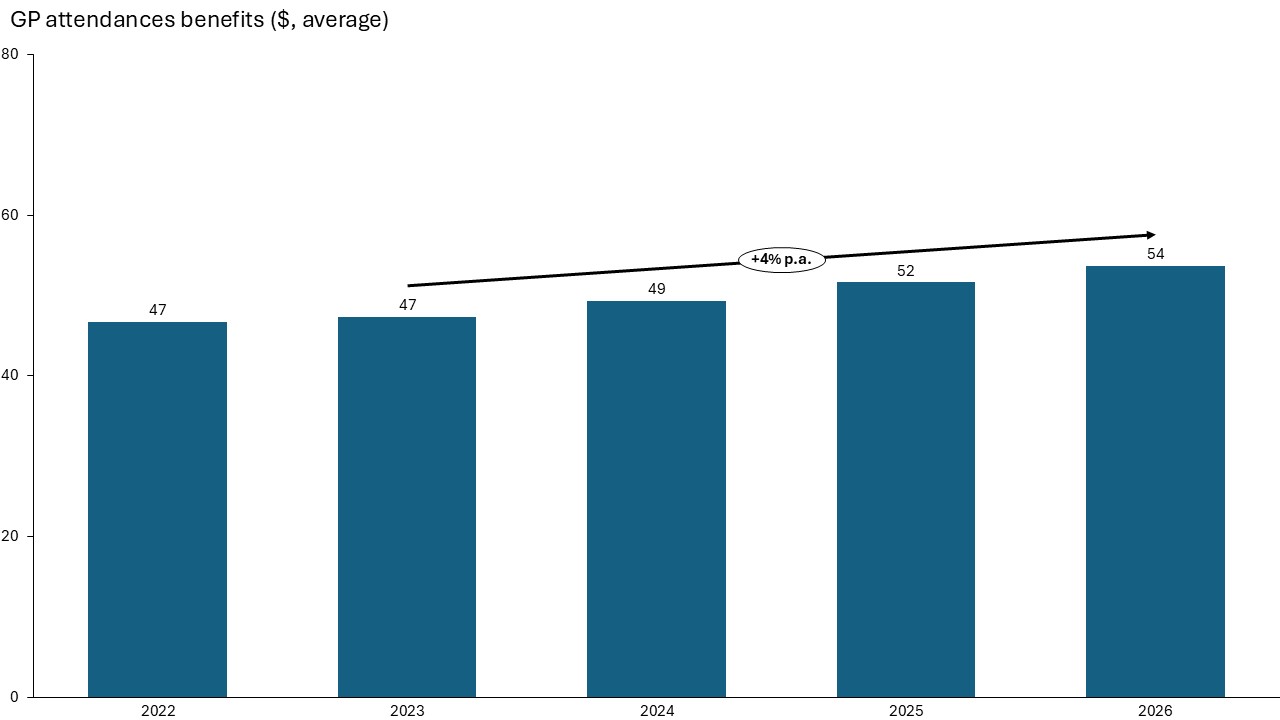
The average benefit per GP attendance rose from $47 to $54, or 4% per annum. That is the faster-moving number, and it is largely a policy artefact rather than a market outcome. The tripling of bulk billing incentives in late 2023 and the Bulk Billing Practice Incentive Program from 1 November 2025: a 12.5% loading on MBS benefits for practices that bulk bill all eligible services, have lifted the average benefit without any change in what a consultation involves.
The read
GP revenue per service is now, to a greater degree than at any point in the past two decades, set in Canberra rather than at the front desk. Practices that opted into the incentive architecture traded pricing freedom for volume certainty. That trade is now largely complete, and it caps the upside as effectively as it protects the downside.
2. Specialists: Flat Volumes, Fastest-Rising Benefit
Volume
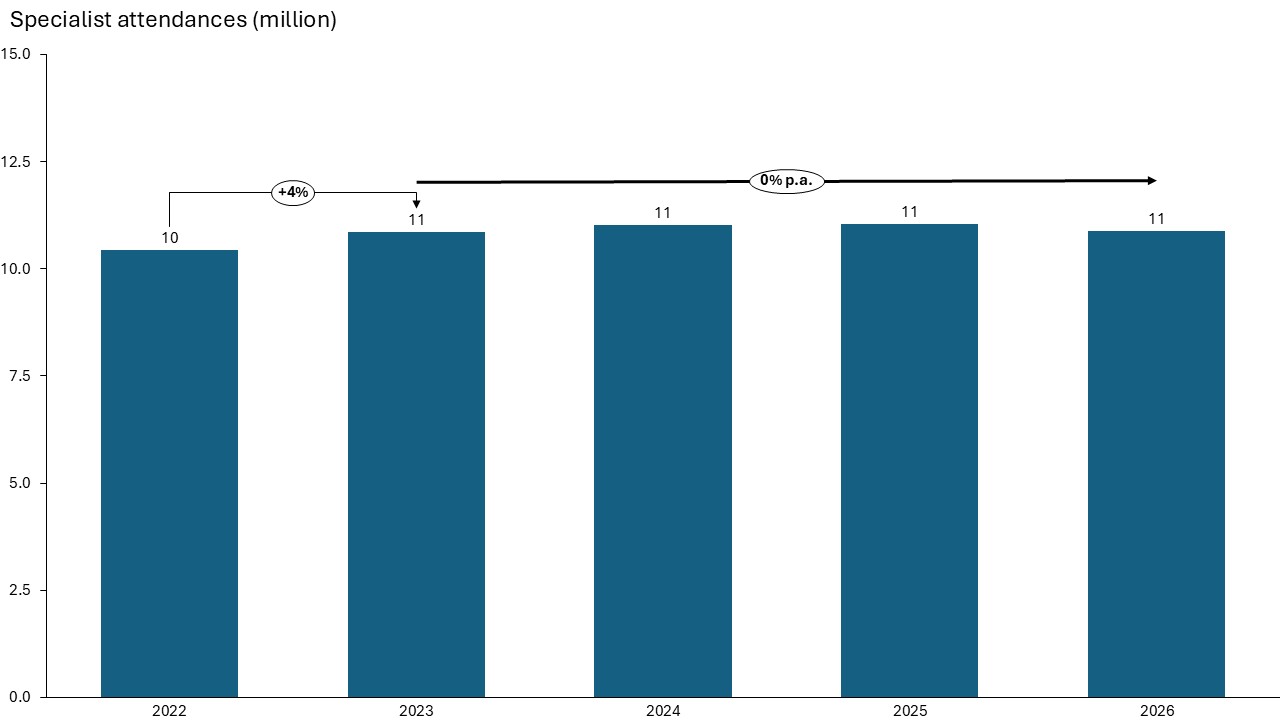
Specialist attendances have gone nowhere. After a 4% lift in 2023 to 10.8 million, the series has been flat: 11.0 million in 2024 and 2025, and 10.9 million in 2026. Zero per cent per annum, with the most recent year slightly down.
Value
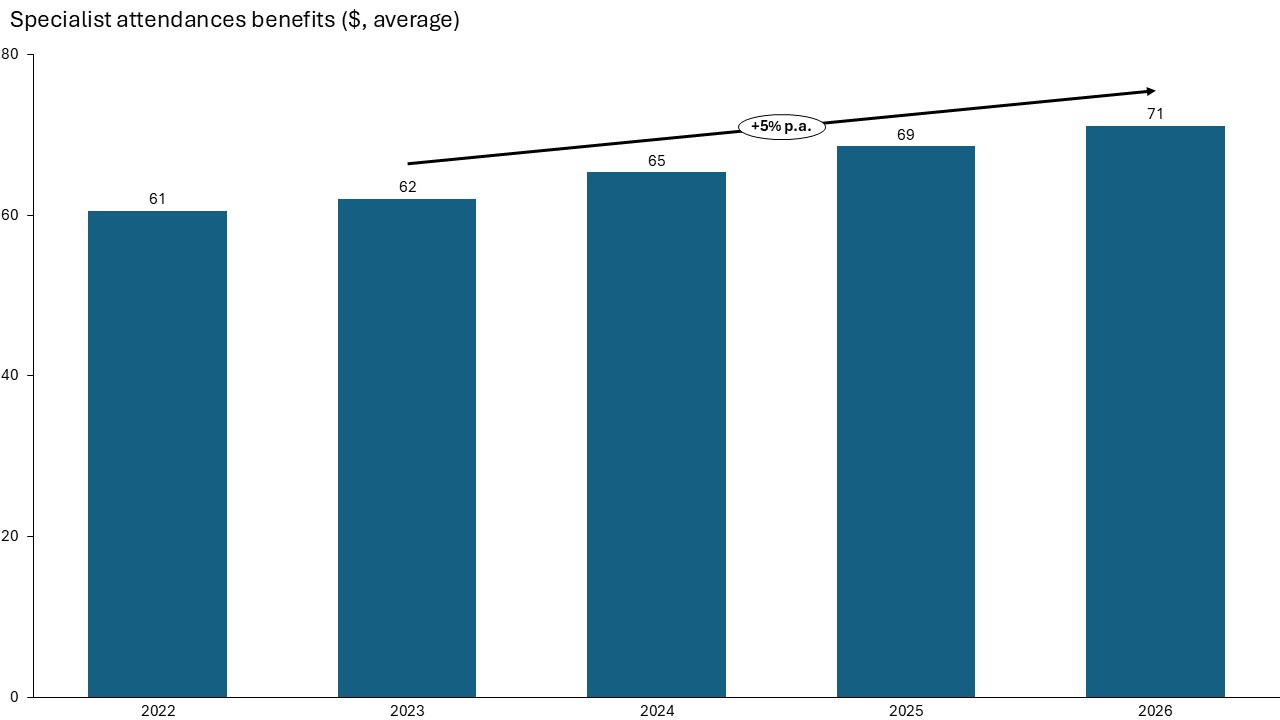
Meanwhile the average benefit per specialist attendance rose from $61 to $71, 5% per annum, the fastest of the three segments we track.
The read
This is the combination that draws attention. A segment where volume is static but the average paid per service is climbing faster than everywhere else is a segment where the growth is coming from price and case mix, not from treating more people. And the published benefit is only part of the picture, it excludes the out-of-pocket gap, which is precisely where the political pressure now sits. Survey data cited in support of the transparency bill found roughly one in two patients did not know their fee before the appointment and 38% received an unexpected bill.
For specialist practices, the implication is uncomfortable but clear: the volume lever is not available, and the price lever is about to become visible.
3. Physicians: The Quiet Growth Engine
Volume
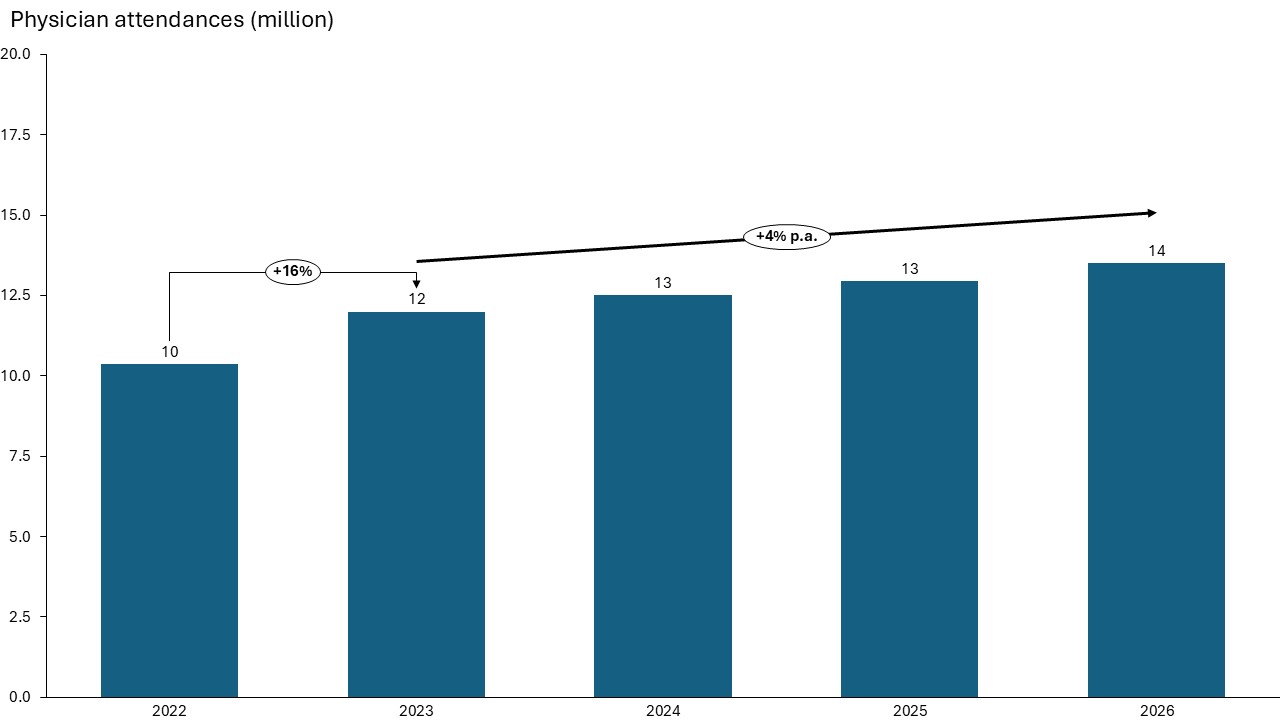
Consultant physician attendances jumped 16% in 2023 to 12.0 million and have kept growing at 4% per annum since: 12.5 million, 12.9 million and 13.5 million. This is the only one of the three segments where volume growth is meaningfully above population growth.
Value
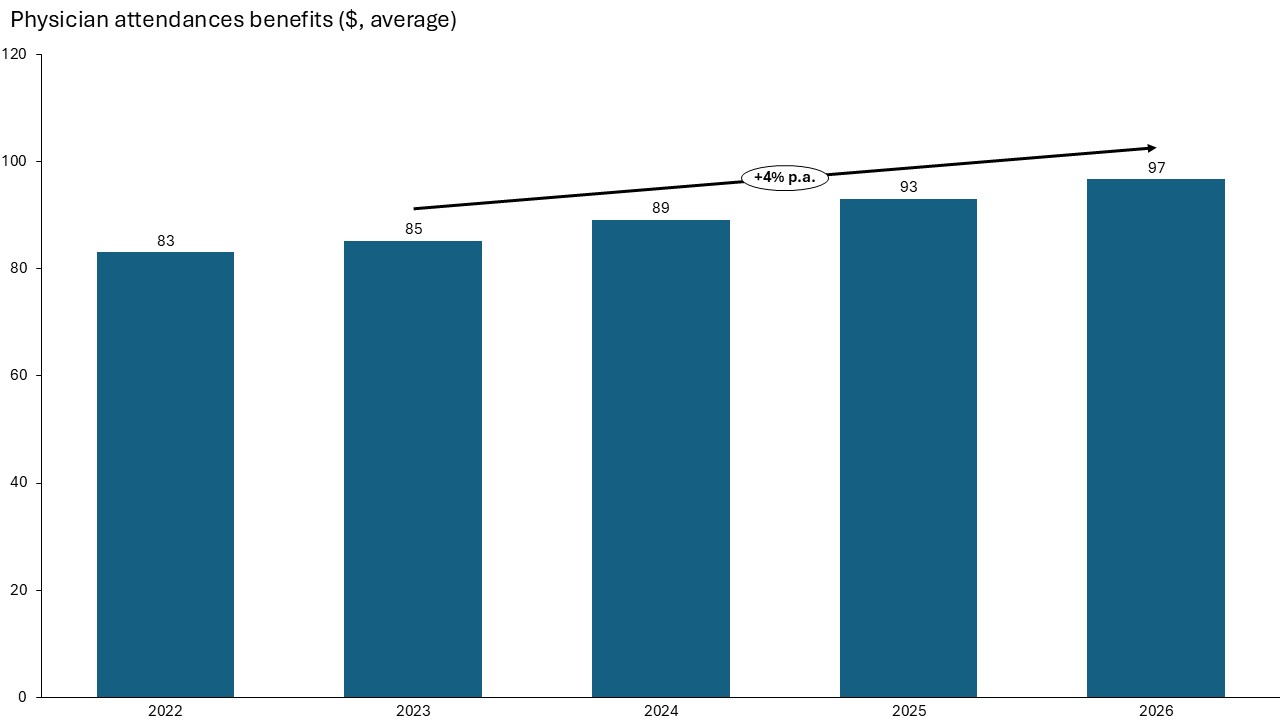
The average benefit rose from $83 to $97, up 4% per annum and by far the highest absolute value of the three.
The read
Combining volume and value, the physician attendance benefit pool has grown at roughly 8.5% per annum since 2023, against approximately 6.5% for GP attendances and 5% for specialist attendances. If the objective is to slow the growth of Medicare outlays, this is arithmetically where the growth is. Chronic disease management, telehealth and complex-care item usage are the obvious places for the next review to look.
4. What Practice Owners Should Take From This
The reform sequence is predictable. Transparency, then benchmarking, then constraint. General practice has been through all three. Specialists are at stage one. There is no reason to expect the arc to be different, and there is considerable value in preparing for stage three while everyone else is arguing about stage one.
Prepare your fee position now. When individual fees are published, every practice's pricing becomes a comparison rather than a quote. The practices that will struggle are not necessarily the expensive ones — they are the ones that cannot explain why. If your fee sits above the median for your specialty and geography, the justification needs to exist and needs to be articulable to a patient before the data goes live, not after.
Know your MBS dependency ratio. What share of your revenue is determined by government policy rather than by your own decisions? For a bulk-billing general practice that number is now close to 100%. For a specialist practice it may be 40%. The two businesses face entirely different risks and should be managed differently.
Volume is not the specialist growth lever. With attendances flat across the segment, growth has to come from utilisation, throughput, case mix and referral share. In a flat market, one practice's growth is another's decline, which raises the return on referrer relationships and patient experience considerably.
Scope of practice changes are structural. Pharmacist prescribing and expanded nurse practitioner roles do not reverse with the electoral cycle. They permanently reshape the low-complexity end of the general practice funnel, and practices should be planning their clinical mix on that assumption.
Next steps
Connect with us to learn how Practice Alliance can help your practice.